
How We Cover the 2026 Syllabus as Students in a Short Time
A Smart, Practical, and Proven Study Guide for Fast Success
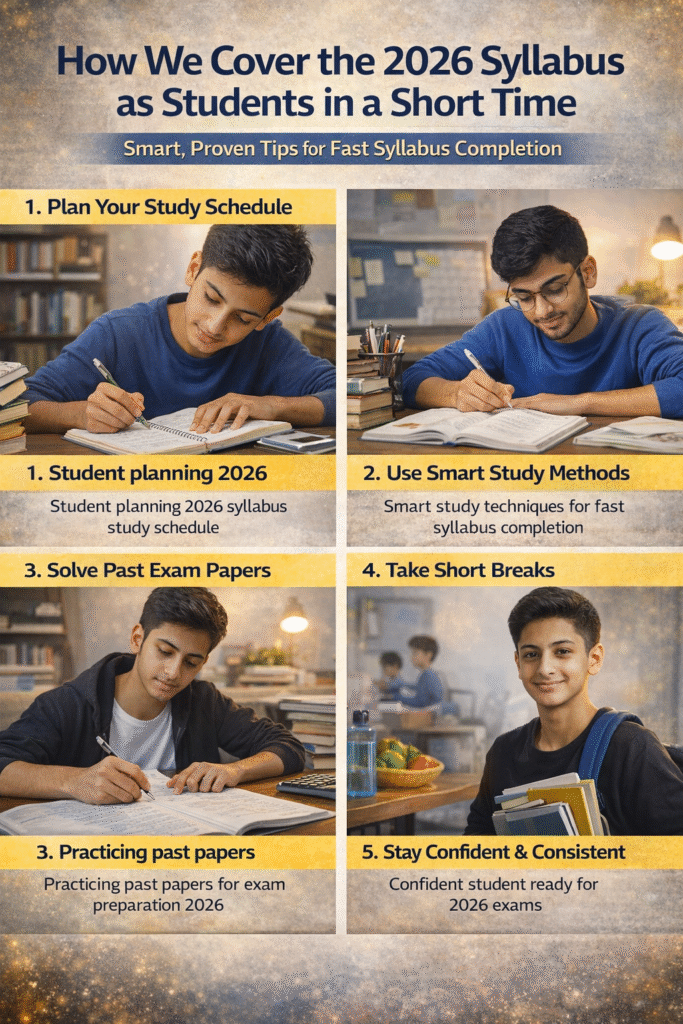
Covering the 2026 syllabus in a short time is one of the biggest challenges students face today. With increased academic competition, lengthy course outlines, and limited preparation time, students often feel overwhelmed. However, with the right study strategy, time management skills, and smart learning techniques, it is absolutely possible to complete the syllabus efficiently and confidently.
This guide explains how students can cover the 2026 syllabus quickly without stress, while maintaining strong understanding and exam readiness.
Why Covering the 2026 Syllabus Feels Difficult
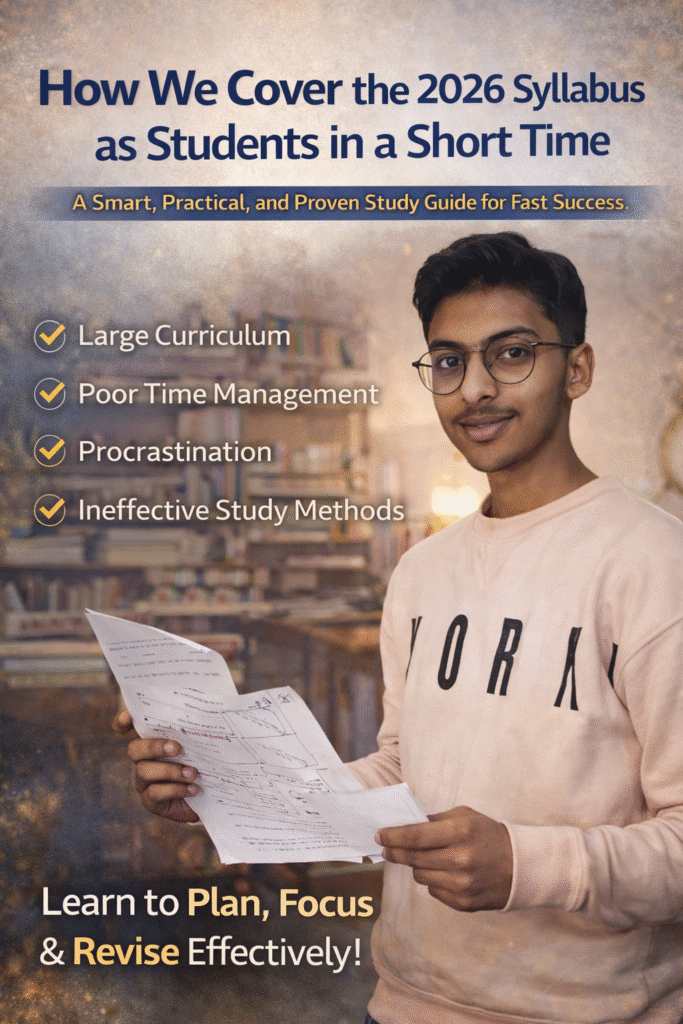
Many students struggle to complete their syllabus on time because of:
- Large and detailed curriculum
- Poor time management
- Lack of planning
- Procrastination and distractions
- Ineffective study methods
Understanding these problems is the first step toward solving them.
1. Understand the Syllabus Before You Start
Before opening books, analyze the full syllabus carefully.
What to do:
- Download the official syllabus for 2026
- Identify high-weightage topics
- Separate easy, moderate, and difficult chapters
- Note repeated topics from previous years
This clarity saves time and prevents unnecessary study.
2. Create a Realistic and Time-Bound Study Plan
A well-structured study plan is the backbone of fast syllabus completion.
Effective planning tips:
- Divide syllabus into daily and weekly targets
- Assign more time to weak subjects
- Keep buffer days for revision
- Avoid unrealistic schedules
Short, focused sessions are more effective than long, tiring hours.
3. Use Smart Study Techniques Instead of Long Hours
Studying smart is more important than studying longer.
Best techniques for 2026 students:
- Active recall (test yourself regularly)
- Mind maps & short notes
- Pomodoro technique (25-minute focus sessions)
- Teaching concepts to someone else
These methods improve retention and reduce revision time.
4. Focus on Important and Repeated Questions
Past papers are a goldmine for students.
How to use them:
- Solve last 5–10 years’ papers
- Identify repeated questions
- Practice exam-style answers
- Time yourself while solving
This approach helps you study what matters most.
5. Make Short Notes for Quick Revision
Short notes help in last-minute preparation.
Best note-making tips:
- Use bullet points
- Highlight formulas, definitions, dates
- Use diagrams and charts
- Keep notes concise
These notes save hours during revision.
6. Manage Time Daily with Discipline
Covering the syllabus quickly requires daily consistency.
Daily time management tips:
- Fix a study routine
- Avoid multitasking
- Reduce social media usage
- Study during peak focus hours
Even 5–6 focused hours daily can complete the syllabus on time.
7. Maintain Physical and Mental Health
A healthy student learns faster.
Key habits:
- Sleep 7–8 hours
- Eat nutritious food
- Drink enough water
- Take short walks or stretches
Stress and exhaustion slow down learning.
8. Use Technology Wisely in 2026
Modern students have powerful digital tools.
Helpful resources:
- Online lectures
- AI learning apps
- Digital flashcards
- Study planners
Avoid distractions and use technology only for learning.
9. Revise Regularly to Save Time Later
Regular revision reduces panic.
Smart revision plan:
- Weekly mini-tests
- Monthly full revision
- Focus on weak areas
- Revise formulas daily
Revision turns knowledge into confidence.
10. Stay Positive and Believe in Yourself
Your mindset plays a huge role.
- Avoid comparing yourself to others
- Focus on progress, not perfection
- Celebrate small achievements
- Stay motivated
Confidence speeds up learning.
Final Thoughts
Covering the 2026 syllabus in a short time is not about rushing—it’s about planning smartly, studying effectively, and staying disciplined. Every student can succeed by using the right techniques, maintaining consistency, and believing in their abilities.
Remember:
Exams test preparation, not potential.
🌟
“Success comes to students who plan wisely, work consistently, and never give up.”