
Preparing for Board examinations in Pakistan—whether you are under the BISE Rawalpindi or the Federal Board (FBISE)—is a journey that requires more than just hard work. It requires a strategy. Every year, thousands of students pour hours into memorization, only to find themselves struggling in the examination hall because they lacked a structured approach.
At Fifth-A Academy, we have helped countless students navigate the pressures of SSC and HSSC exams. In this guide, we break down the exact blueprint for exam success, designed to help you study smarter, retain more, and walk into your exam hall with absolute confidence.
1. Understanding the Board Examination Format
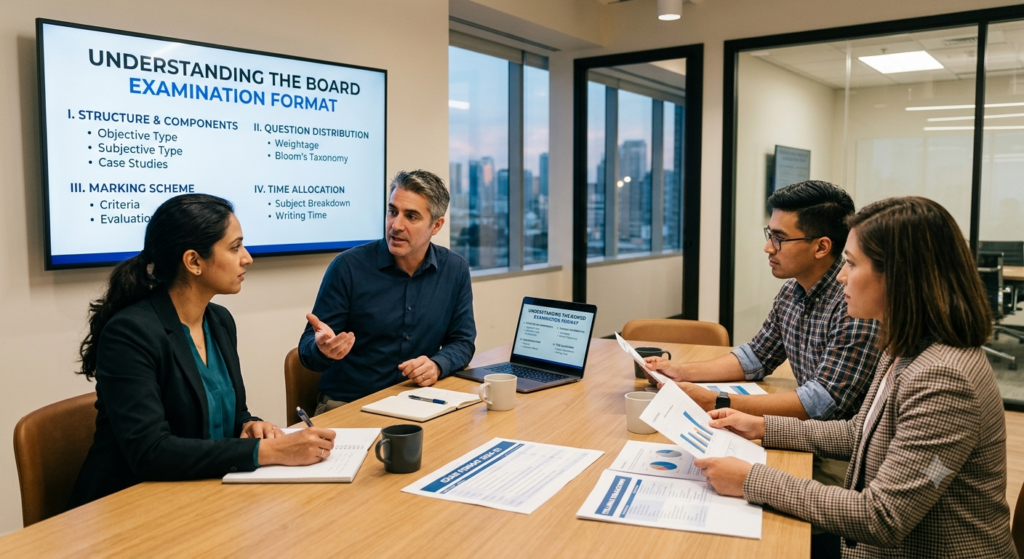
The first step to winning is knowing the terrain. Both BISE Rawalpindi and FBISE have specific patterns for their question papers.
- The Weightage Game: Understand how many marks are allocated to MCQs, Short Questions, and Long Questions. FBISE, in particular, has shifted toward a conceptual framework. Cramming is no longer enough; you must understand the why behind the what.
- The Syllabus Scope: Always refer to the official curriculum provided by your board. Do not waste time on topics that are excluded from the current year’s assessment.
- Previous Years’ Trends: Analyze the last five years of papers. You will often notice patterns: specific chapters that carry more marks or recurring types of conceptual questions.
2. Crafting Your Master Study Schedule
A common mistake students make is studying “whenever they feel like it.” Successful students treat study time like a job.
The “Deep Work” Method
- Divide and Conquer: Break down your syllabus into manageable, bite-sized topics. Instead of saying, “I will study Physics today,” say, “I will cover Chapter 4: Work and Energy today.”
- Prioritize Weak Areas: Dedicate the first hour of your study session to the subject or chapter you find most difficult. Your brain is freshest at the start of your day.
- The 50/10 Rule: Study for 50 minutes of intense focus, then take a 10-minute break. This prevents mental burnout and keeps your retention levels high.
3. Active Learning: Stop Reading, Start Doing

Many students fall into the trap of “passive reading”—reading their textbook repeatedly and thinking they have mastered the material. This is a false sense of security.
Proven Active Learning Techniques
- The Feynman Technique: If you can’t explain a concept to a younger student in simple terms, you don’t understand it well enough yet. Use this to identify gaps in your knowledge.
- Active Recall: Read a paragraph, close the book, and write down or say aloud everything you remember. This forces your brain to retrieve information, which is the most effective way to build long-term memory.
- Skeleton Outlining: For long-form answers in subjects like Biology or History, don’t write essays during your practice. Jot down a “skeleton outline” of your key points first. This mimics the way board examiners look for structured, point-based answers.
4. Subject-Specific Strategies
Mathematics
There is no shortcut here. Practice is the only way to mastery.
- Show Your Work: Examiners award marks for steps. Even if your final answer is wrong, a correct methodology can still earn you partial marks.
- Example Problems: Never jump to exercises without solving every single example in the textbook. Often, these examples are the base for the most complex exam problems.
Physics and Chemistry
- Units Matter: Never leave a numerical answer without its unit. It is a common area where students lose marks unnecessarily.
- Label Everything: In biology and physics, a well-labeled, neat diagram is often worth more than a paragraph of text. Keep your pencils sharp and your diagrams clean.
Computer Science & Electives
- Code Documentation: If you are writing programs, always include comments. It shows the examiner you understand the logic.
- Definition & Examples: Always support your definitions with a real-world example to demonstrate depth of understanding.
5. The “Final Countdown”: The Last 4–6 Weeks
This is when the game is won. Your goal in the final month is to transition from “learning” to “executing.”
- Timed Mock Exams: Set a timer and solve a full-length past paper in one sitting. Do this without your phone, your notes, or any distractions. This builds your “exam stamina” and teaches you how to manage your time so you don’t panic when the clock is ticking.
- Self-Grading: Be your own toughest critic. Use the official marking scheme to grade your mock papers. If you are missing marks, identify why. Was it a lack of knowledge, or a failure to structure your answer correctly?
6. Physical and Mental Wellbeing
Your brain is an organ, and it needs fuel.
- Sleep is Non-Negotiable: Cramming until 3:00 AM destroys your memory consolidation process. Your brain processes and stores what you learned while you sleep. Aim for 7–8 hours.
- Nutrition: Avoid excessive caffeine and junk food. They lead to energy crashes during exams. Drink plenty of water and eat brain-friendly foods like nuts and fresh fruits.
7. How Fifth-A Academy Can Support You
At Fifth-A Academy, we believe that every student has the potential to be a topper. We provide:
- Targeted Guess Papers: Curated based on current board trends.
- Conceptual Coaching: Focused on bridging the gap between textbook theory and board-level application.
- Regular Mock Tests: We simulate the environment of the BISE/FBISE examination hall so you walk into the real test feeling like you’ve been there before.
Conclusion
Success in the BISE Rawalpindi and FBISE exams is not about being a genius; it is about being consistent, strategic, and organized. By implementing these techniques—starting with a plan, utilizing active recall, and practicing under time pressure—you are already ahead of 90% of your peers.
Ready to start your journey to the top? Contact the team at Fifth-A Academy today to join our intensive exam preparation sessions and get access to our exclusive study materials.
Don’t wait for the exam date to arrive—prepare today so you can celebrate tomorrow.