

How We Manage Time in Exams: A Complete Guide for Students
Examinations are one of the most important parts of a student’s academic journey. However, many students face a common problem — poor time management. No matter how well you prepare, if you fail to manage your time properly during exams, your performance can suffer.

Time management is not just about studying more; it is about studying smartly, planning effectively, and executing confidently. In this blog, we will explore practical strategies that help students manage their time before and during exams to achieve the best results.
Why Time Management is Important in Exams
Time management plays a crucial role in exam success. It helps students:
- Complete the syllabus on time
- Reduce exam stress and anxiety
- Improve focus and productivity
- Attempt all questions in the exam
Students who manage their time effectively are more confident and perform better compared to those who rely on last-minute preparation.
1. Create a Smart Study Plan
The first step to managing time is creating a realistic study timetable. A proper schedule ensures that all subjects are covered without panic.
- Divide your syllabus into small parts
- Assign time slots for each subject
- Focus more on weak subjects
- Keep time for revision

A structured timetable helps avoid confusion and gives direction to your preparation. Experts recommend setting daily and weekly goals to stay consistent and motivated .
2. Set Clear Goals for Each Study Session
Studying without a goal wastes time. Always define what you want to achieve in a study session.
For example:
❌ Study Chemistry
✅ Complete Chapter 3 + solve 20 MCQs

Clear goals improve efficiency and keep you focused. According to study experts, breaking the syllabus into small achievable targets makes preparation easier and more effective .
3. Use the Pomodoro Technique
One of the most effective time management techniques is the Pomodoro Method.
- Study for 25–50 minutes
- Take a 5–10 minute break
- Repeat the cycle
This method improves concentration and prevents mental fatigue. Research shows that short, focused study sessions are far more productive than long, distracted hours .

4. Avoid Distractions
Distractions are the biggest enemy of time management.
Common distractions include:
- Mobile phones
- Social media
- TV and noise
To stay focused:
- Keep your phone away
- Study in a quiet environment
- Use apps to block distractions
Even 2 hours of focused study can be more productive than 6 hours of distracted learning .

5. Practice Past Papers
Practicing past papers is one of the best ways to manage time during exams.
- Solve papers with a timer
- Simulate real exam conditions
- Improve writing speed
Regular practice helps students understand the exam pattern and manage time effectively under pressure. It also boosts confidence and reduces anxiety .

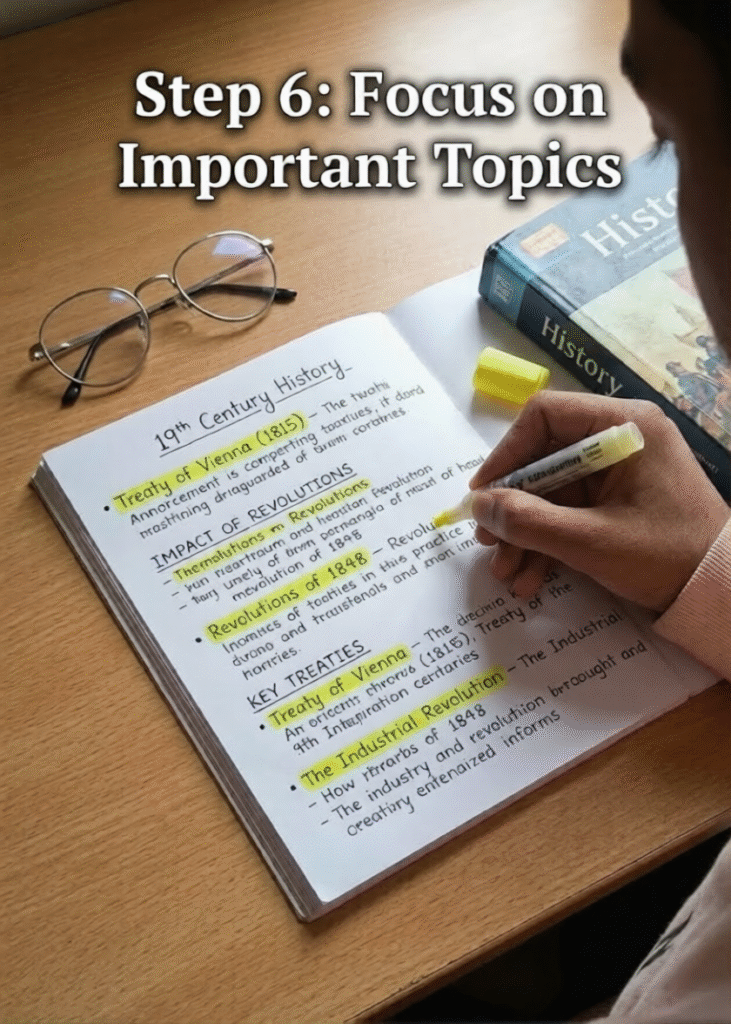
6. Prioritize Important Topics
Not all topics carry equal weight. Smart students focus on high-scoring and important topics first.
How to prioritize:
- Analyze past papers
- Focus on repeated questions
- Study high-weightage chapters first
This strategy ensures maximum marks even if time is limited.
7. Take Care of Your Health
Good health is essential for effective time management.
- Sleep at least 6–7 hours
- Eat healthy food
- Take short breaks
Continuous study without rest leads to burnout and poor concentration. A healthy body supports a healthy mind, which improves learning and performance .

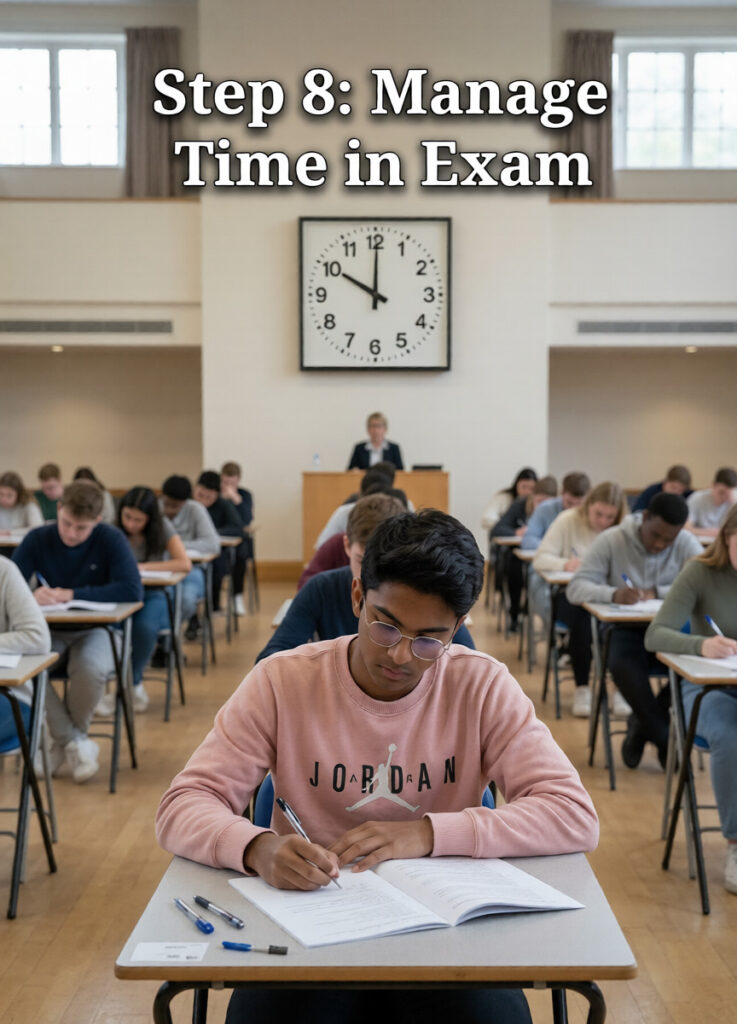
8. Manage Time During the Exam
Time management during the exam is just as important as preparation.
Before Starting
- Read all questions carefully
- Plan which questions to attempt first
During the Exam
- Allocate time based on marks
- Attempt easy questions first
- Don’t spend too much time on one question
At the End
- Keep 10–15 minutes for revision
- Check mistakes and incomplete answers
Experts suggest using the initial reading time wisely to plan your strategy and boost confidence .
9. Avoid Last-Minute Cramming
Cramming creates stress and confusion. Instead:
- Start preparation early
- Revise regularly
- Follow a consistent routine
Consistent study is far more effective than studying everything at the last moment.

10. Stay Positive and Confident
Your mindset plays a huge role in time management.
- Stay calm during exams
- Believe in your preparation
- Avoid panic
Confidence helps you think clearly and use your time wisely.

Conclusion
Time management is a skill that every student must develop to succeed in exams. It is not about studying harder, but about studying smarter.
By creating a proper plan, setting clear goals, avoiding distractions, and practicing regularly, students can manage their time effectively and perform their best in exams.
Remember:
“Success in exams is not just about knowledge, but about how well you manage your time.”