
How We Manage Time in Board Exam (Complete Guide for Students)
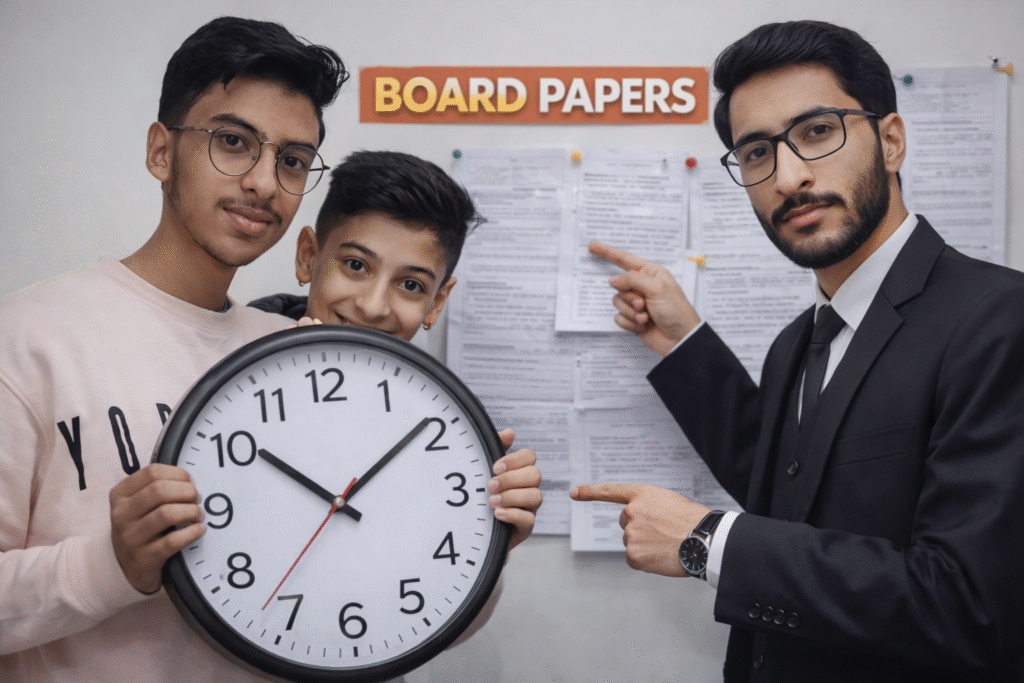
Time management in board exams plays a crucial role in achieving high scores. Many students know the answers but fail to complete the paper on time. In today’s competitive education system, especially during board exams, smart time management can make the difference between average and excellent results.
This article explains how we manage time in board exams effectively, with practical tips, strategies, and proven techniques suitable for students in 2026 and beyond.
Why Time Management Is Important in Board Exams
Board exams are not only a test of knowledge but also a test of speed, accuracy, and planning. Poor time management can lead to:
- Incomplete papers
- Panic and stress
- Silly mistakes
- Loss of easy marks
Good time management helps students:
- Attempt all questions
- Stay calm and focused
- Improve answer quality
- Maximize scores
1. Understand the Exam Pattern Properly
Before the exam, students must:
- Study the paper pattern
- Know the marks distribution
- Understand question types (MCQs, short answers, long questions)
This knowledge helps in allocating time wisely to each section during the exam.
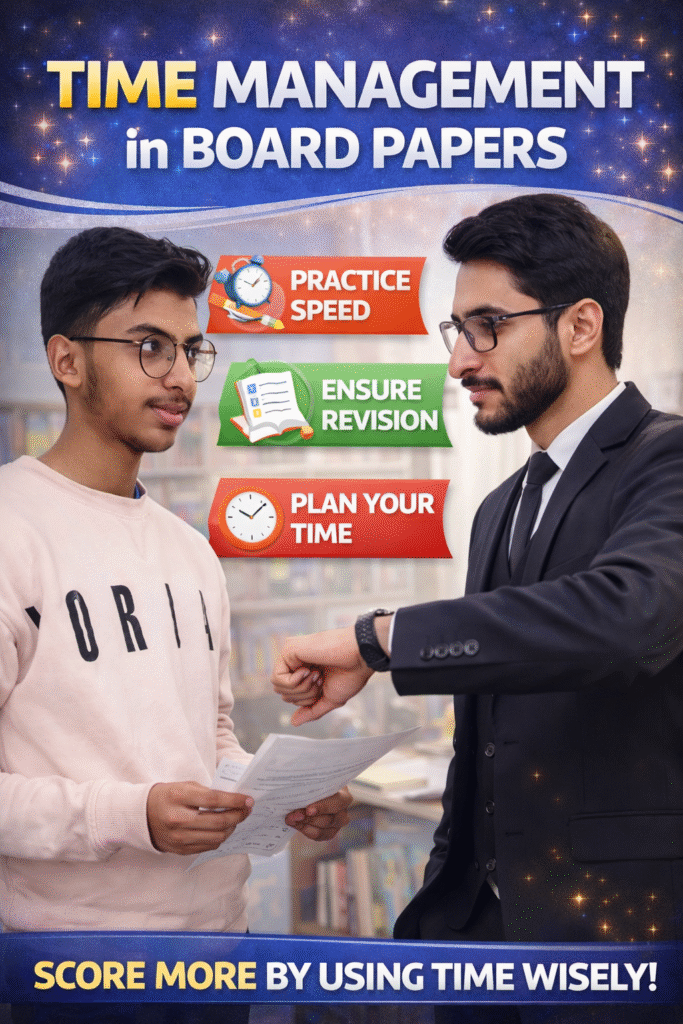
2. Make a Time Management Strategy Before the Exam
Always prepare a time plan such as:
- MCQs: 15–20 minutes
- Short questions: 30–40 minutes
- Long questions: 60–70 minutes
- Revision: 10–15 minutes
A planned approach ensures that no section is rushed or skipped.
3. Start with Easy Questions First
Begin the paper with questions you know well. This:
- Builds confidence
- Saves time
- Reduces exam fear
Avoid spending too much time on difficult questions at the beginning.
4. Do Not Spend Too Much Time on One Question
If a question seems difficult:
- Skip it temporarily
- Move to the next one
- Return to it later
This habit helps in covering the entire paper.
5. Practice with Mock Tests and Past Papers
Regular practice improves:
- Writing speed
- Time control
- Accuracy
Solve:
- Previous board exam papers
- Sample papers
- Timed mock tests
This is one of the best time management techniques for board exams.
6. Write Clear and To-the-Point Answers
Avoid unnecessary details. Instead:
- Stick to the question
- Use headings and bullet points
- Write neatly and clearly
This saves time and creates a positive impression on the examiner.
7. Keep Time for Revision
Always reserve the last 10–15 minutes to:
- Check answers
- Correct spelling mistakes
- Ensure all questions are attempted
Revision helps avoid careless errors.
8. Stay Calm and Confident During the Exam
Panic wastes time. To stay calm:
- Take deep breaths
- Stay focused on your paper
- Believe in your preparation
A calm mind works faster and better.
Common Time Management Mistakes to Avoid
- Spending too much time on one question
- Ignoring revision time
- Starting with the hardest section
- Writing very long answers unnecessarily
Avoiding these mistakes can significantly improve performance.
Final Thoughts
Managing time in board exams is a skill that improves with planning and practice. Students who prepare smartly, practice regularly, and stay calm during the exam can easily manage time and score higher marks.
Remember, success in board exams is not about writing more, but writing smartly and on time.
Good Words to End the Post 🌟
“Time is your biggest asset in exams—use it wisely, and success will follow.”