
Exam Stress Management Tips for Students 2026
A Complete Guide to Stay Calm, Focused, and Confident
Exam stress is a common challenge faced by students, especially during board exams, entrance tests, and competitive assessments. In 2026, academic pressure has increased due to high competition, digital learning, and performance expectations. Learning how to manage exam stress effectively is essential for both mental health and academic success.
This article shares practical exam stress management tips for students, helping them stay calm, focused, and confident before and during exams.
Why Exam Stress Happens
Exam stress usually occurs due to:
- Fear of failure
- Heavy syllabus and limited time
- High expectations from parents and teachers
- Lack of preparation or poor time management
Understanding the cause of stress is the first step toward controlling it.
1. Create a Realistic Study Plan
A well-planned study schedule reduces anxiety and confusion. Students should:
- Divide the syllabus into small sections
- Set daily achievable goals
- Include short breaks between study sessions
Avoid last-minute cramming, as it increases stress.
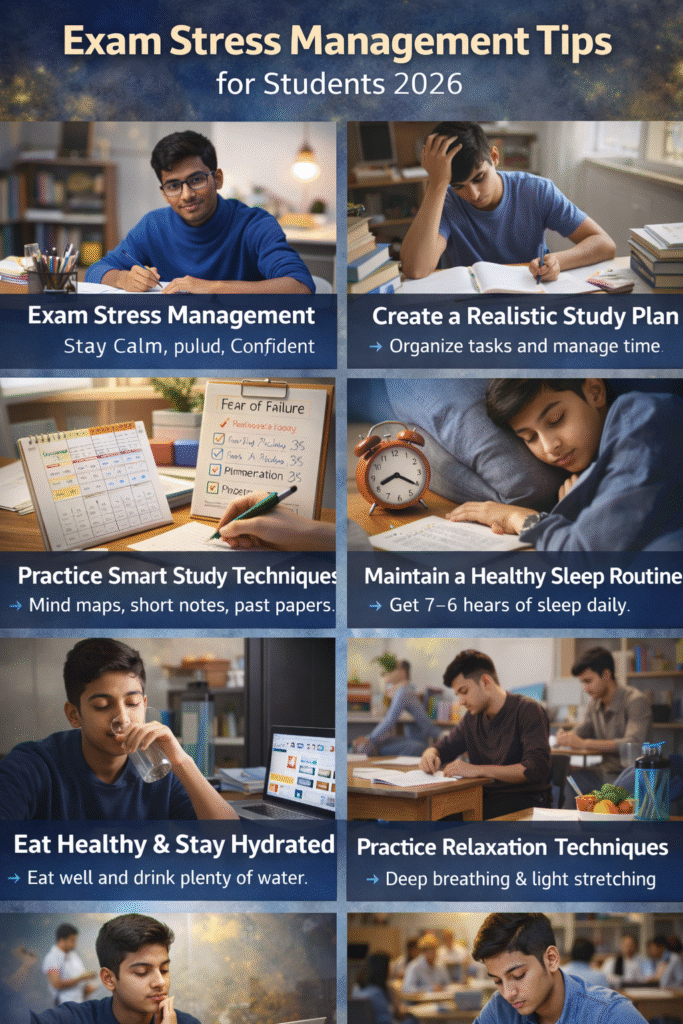
2. Practice Smart Study Techniques
In 2026, smart studying is more effective than long study hours. Try:
- Active recall
- Short notes and mind maps
- Solving past papers and mock tests
Smart techniques improve confidence and reduce exam fear.
3. Maintain a Healthy Sleep Routine
Lack of sleep increases stress and reduces memory power. Students should:
- Sleep 7–8 hours daily
- Avoid studying late at night regularly
- Stop using mobile phones before bedtime
Good sleep helps the brain stay fresh and focused.
4. Eat Healthy and Stay Hydrated
A healthy diet supports both physical and mental performance.
- Eat fruits, vegetables, and protein-rich foods
- Avoid excessive junk food and caffeine
- Drink plenty of water
Healthy eating helps students feel energetic and calm.
5. Practice Relaxation and Breathing Techniques
Simple relaxation methods can reduce exam stress quickly:
- Deep breathing exercises
- Light stretching
- Short walks
Even 5–10 minutes of relaxation daily can make a big difference.

6. Avoid Negative Comparison
Comparing yourself with others increases pressure and lowers confidence. Remember:
- Every student has a different learning pace
- Focus on your own preparation
- Believe in your effort and progress
Confidence is a powerful stress reducer.
7. Use Technology Wisely
In 2026, students can use technology positively:
- Study planner apps
- AI learning tools
- Online practice tests
Avoid excessive social media, as it wastes time and increases anxiety.
8. Revise Regularly Instead of Last-Minute Panic
Regular revision helps students feel prepared and confident. Create:
- Weekly revision plans
- Short summary notes
- Formula and key-point lists
Prepared students feel less stressed during exams.
9. Stay Calm During the Exam
On exam day:
- Read questions carefully
- Start with easy questions
- Manage time properly
- Take deep breaths if you feel nervous
A calm mind performs better under pressure.
10. Seek Support When Needed
Talking to someone can reduce stress:
- Share concerns with teachers
- Talk to parents or mentors
- Ask for academic guidance
Seeking help is a sign of strength, not weakness.
Final Thoughts
Exam stress is normal, but it should never control your performance. With proper planning, healthy habits, and a positive mindset, students can manage exam stress effectively in 2026.
Remember, exams test your knowledge—not your worth. Stay calm, trust your preparation, and give your best effort.
🌟
“Stay calm, stay focused, and trust yourself—success comes to those who prepare with confidence.”
😊